What Does BBCOR Mean for High School or College Baseball?
Posted by The Experts at LongballBats.com on May 21st 2026
BBCOR Baseball Bats: Everything You Need to Know (From People Who Actually Know Bats)
If you've been shopping for a baseball bat for high school or college play and keep running into the term "BBCOR," you're not alone. It's one of the most Googled questions in the baseball world, and one of the most misunderstood. At our facility, we live and breathe bat performance. We've swung them, tested them, compared them, and talked about them more than is probably healthy. So let's break BBCOR down once and for all — no fluff, no filler, just the real deal.
What Does BBCOR Stand For?
BBCOR stands for Batted Ball Coefficient of Restitution. Try saying that three times fast.
It's a measurement of the "trampoline effect" — how much energy a bat transfers back to the ball at the moment of contact. A really springy bat acts like a trampoline, launching the ball faster than it naturally should. BBCOR puts a hard cap on that springiness.
Under the BBCOR standard, a bat cannot exceed a rating of .50. That means for every unit of energy going in, no more than half can come back out through the ball. Most certified bats actually test at around .48 or .49, right at the edge of legal. The test itself involves firing baseballs from a cannon at pre-determined spots on the barrel of a stationary bat, measuring the ball's speed before and after contact to calculate that ratio.
Why Does BBCOR Exist?
Let's rewind to the early 2000s. Non-wood bats had become dramatically more powerful than wood. Exit speeds were climbing, pitchers were getting hurt by line drives, and the game at the high school and college levels was starting to look less like baseball and more like a home run derby.
Before BBCOR, the governing standard was called BESR (Ball Exit Speed Ratio), which measured how fast the ball left the bat. But BESR had a serious flaw: it didn't account for what happened to a bat after it was broken in. A composite bat could actually get hotter with use, performing well above its tested specs once the fibers loosened up.
==============================
Here at LongballBats, we're the bat performance experts and our ProMAX Heat Roll/Break-In Process with Progressive Pressure is the best way on Planet Earth to break in any new or used, composite or alloy BBCOR baseball bat, adding 20-40ft of distance to solid hits, increasing durability and improving consistency. If you're in the market for a brand new, game ready BBCOR Baseball Bat, check out our full selection here!
==============================
The NCAA and the National Federation of State High School Associations (NFHS) had seen enough. They needed a standard that controlled the trampoline effect directly, tested bats in their broken-in state rather than fresh out of the wrapper, and brought non-wood bats closer to the performance level of wood.
On January 1, 2012, BESR was officially retired and BBCOR became the rule for high school and collegiate baseball. The transition was significant. Home run numbers dropped, pitchers everywhere breathed a collective sigh of relief, and bat manufacturers had to completely rethink how they built high-performance non-wood bats.
Who Is Required to Use BBCOR Bats?
If you play high school or college baseball, you need a BBCOR bat. Both the NFHS and the NCAA require BBCOR certification for all non-wood bats used in competition. If a bat doesn't carry the "BBCOR Certified .50" stamp, it's illegal for those levels of play, and your umpire will notice.
For younger players in middle school and below, the story is different. Most youth leagues use USA Baseball or USSSA certification standards. Those standards allow for higher performance because younger hitters benefit from more pop in the bat. If you're shopping for a 12-year-old, don't automatically reach for BBCOR — check your league rules first.
How to Spot a BBCOR-Certified Bat
Look for the "BBCOR Certified .50" silkscreen stamp, usually printed on the barrel or taper of the bat. No stamp, not legal.
Beyond the stamp, all BBCOR bats must meet these specs:
-
Drop weight of -3 or heavier (length in inches minus weight in ounces can be no more than -3)
-
Barrel diameter no greater than 2 5/8 inches
-
Maximum length of 36 inches
This is why you'll never find a BBCOR bat with a -5 or -8 drop. They simply don't exist under the standard. Every BBCOR bat on the market is -3, which is why swing weight — not drop — becomes the key variable when you're comparing models.
What About Wood Bats?
Solid, one-piece wood bats are automatically BBCOR compliant. No testing required. Wood naturally transfers less energy than metal or composite, so it inherently falls within the .50 threshold. That's also the whole point — BBCOR was designed to bring non-wood bats down to the performance level of wood, not the other way around.
The Big Three Materials: Alloy, Composite, and Hybrid
Walk into any BBCOR lineup and you'll see three construction types.
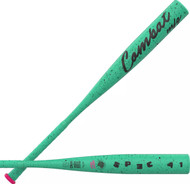
Alloy (Aluminum): One-piece construction, stiff feel, loud "ping" on contact. Ready to use out of the wrapper with no break-in needed. Typically more affordable and very durable. Great for contact hitters who want immediate feedback. Strong examples include the DeMarini Voodoo One, Marucci CAT X RCKLESS, Louisville Slugger Omaha, and the Combat MFG Spec A1 (more on that one in a moment).
Composite: Made from layered carbon fiber, composite bats have a larger sweet spot, reduced vibration, and a more wood-like feel. The trade-off is they require a break-in period of around 150 to 200 hits before reaching peak performance, and they're typically pricier. Top options include the Rawlings Icon, Easton Hype Fire, and DeMarini CF.
Hybrid: Two-piece construction pairing a composite handle with an alloy barrel. You get the vibration dampening and flex of composite without the break-in hassle. A strong all-around option for hitters who want the best of both worlds. The DeMarini The Goods, Marucci CATX Rckless Hybrid, Louisville Slugger Select PWR, and the Combat MFG Spec H1 all fall into this category.
The Brands Dominating the BBCOR Market Right Now
The BBCOR space is competitive and loaded with serious options. Here are the brands leading the charge heading into 2026.
Combat MFG has become one of the most talked-about names in the BBCOR world, and for good reason. Their Spec A1 is a one-piece alloy bat built around proprietary SFX Barrel Technology, which creates a longer barrel and bigger sweet spot than virtually any other one-piece alloy on the market. It delivers an unmistakable sound at contact, a balanced swing weight that generates elite bat speed, and a stiff one-piece feel with the forgiveness you'd normally only expect from a two-piece design. The Spec A1 has become a go-to for serious high school and college hitters, and limited-edition colorways have turned it into something of a collector's item as well.
If you need power with added handle flex, Combat's Spec H1 takes the same proven alloy barrel from the Spec A1 and pairs it with a premium composite handle. The result is a two-piece hybrid with a slight end-load, reduced sting on off-center hits, and the kind of feel that power hitters tend to gravitate toward. It's one of the highest-performing BBCOR bats available today.
==============================
Here at LongballBats, we're the bat performance experts and our ProMAX Heat Roll/Break-In Process with Progressive Pressure is the best way on Planet Earth to break in any new or used, composite or alloy BBCOR baseball bat, adding 20-40ft of distance to solid hits, increasing durability and improving consistency. If you're in the market for a brand new, game ready BBCOR Baseball Bat, check out our full selection here!
==============================
DeMarini has long been a fan favorite known for two-piece technology and elite performance. The Goods (an end-loaded hybrid) and the Voodoo One (a single-piece alloy) cover the full spectrum of hitter types.
Marucci is the brand most trusted by professional players, and their CAT X series has been dominant at every level of competition. The CATX Rckless in both alloy and hybrid configurations has made serious noise in the BBCOR space.
Rawlings continues to push performance with the Icon composite and Clout AI alloy, both of which have generated impressive independent exit velocity numbers.
Louisville Slugger brings over 140 years of bat-making heritage to the table. Their Select PWR targets power hitters, the Atlas is a balanced all-arounder, and the Omaha remains one of the most trusted alloy bats in the game year after year.
Easton has been innovating in bat construction for decades, and the Hype Fire composite continues to be a top pick for hitters who prioritize composite feel and a wide sweet spot.
Victus has grown fast from its wood-bat roots into a respected BBCOR player, with bats like the Nox earning strong reviews for balance and feedback.
Warstic and Mizuno round out the field for hitters who want something a little different, whether that's boutique craftsmanship from Warstic or the refined, feedback-focused feel that Mizuno has built its reputation on.
Swing Weight Matters More Than You Think
Because every BBCOR bat is -3 drop, the main differentiator between models is swing weight — how heavy a bat feels when you swing it, not just what it weighs on a scale.
A balanced bat distributes weight more evenly throughout the barrel, making it easier to control through the zone. Contact hitters and speedier swingers tend to prefer balanced models. An end-loaded bat concentrates more mass toward the barrel end, which generates additional force on contact but demands a stronger, more disciplined swing to get through the zone on time.
Matching swing weight to your hitting style and physical profile is one of the most important decisions you'll make when choosing a BBCOR bat — and it's one of the areas where our expertise actually matters.
The Bottom Line
BBCOR bats exist for a reason: to keep the game fair, protect players, and preserve the integrity of baseball at its highest amateur levels. They've done all three. But within the BBCOR framework, there is still enormous variation in feel, performance, construction, and value — and choosing the wrong bat for your swing profile is a real way to leave performance on the table.
That's exactly where we come in. We're not just selling bats; we're matching hitters to the right tool for their game. If you have questions about which BBCOR bat is the right fit for you, talk to us. Bat performance is what we do.
Longball Bats: Bat Performance to a Science.